From Apprentice to Architect: What the Guild Model Reveals About Building Engineers Who Actually Know Their Craft
Somewhere between the twelve-week bootcamp and the senior engineering role, something has gone missing. The modern technology industry has become extraordinarily efficient at producing developers who can follow a tutorial, assemble a project from existing patterns, and contribute to a codebase—provided the codebase already exists and the patterns are already established. What it has become considerably less effective at producing is engineers who understand why the patterns work, who can reason from first principles when those patterns fail, and who possess the kind of deep craft knowledge that allows them to innovate rather than merely imitate.
This is not a criticism of individual engineers. It is a structural observation about how the industry has chosen to develop talent. And the structure it has chosen is, when examined honestly, rather poor.
The Guild's Quiet Logic
Britain's craft guild system, which reached its mature form during the medieval period and persisted in various guises well into the industrial era, was not primarily concerned with producing workers. It was concerned with preserving and transmitting knowledge across generations. The distinction is significant.
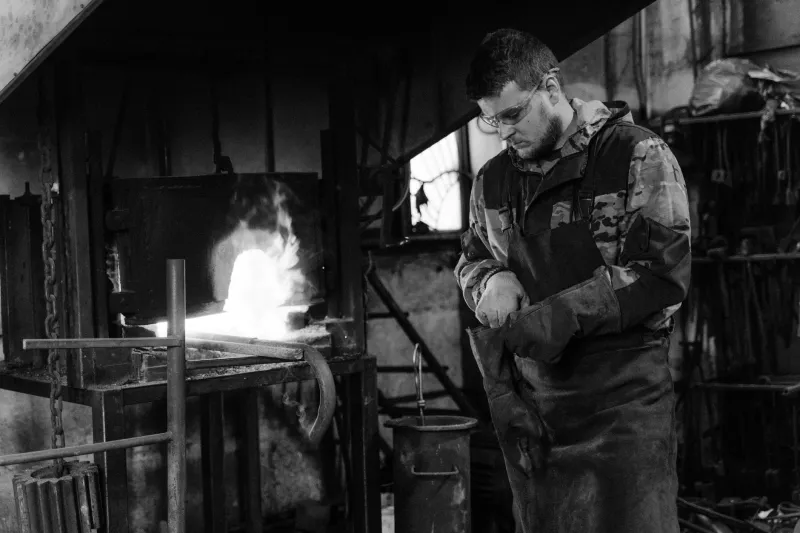
An apprentice entering a guild—whether in the goldsmiths' workshops of Cheapside or the weavers' halls of Norwich—did not begin by learning to produce finished goods. They began by learning to observe. They watched masters work. They maintained tools. They performed preparatory tasks that, on the surface, appeared menial but which were, in fact, deeply pedagogical. The act of preparing a master's materials required understanding what those materials were for.
Progression from apprentice to journeyman was not time-bounded in the modern sense. It was competency-bounded. A journeyman had demonstrated not merely that they could complete tasks, but that they understood the principles underlying those tasks well enough to apply them in novel situations. The master's role was not to deliver instruction in the classroom sense—it was to create conditions in which genuine understanding could develop through sustained, proximate engagement with real work.
This is almost the precise opposite of how most technology organisations approach junior developer onboarding.
What Bootcamps Got Right, and What They Missed
It would be unfair to dismiss the bootcamp model entirely. It democratised entry into the technology sector in ways that traditional computer science degrees had not managed. It recognised that practical skill development does not require three years of academic study. It produced a generation of career-changers who brought domain expertise from other fields—finance, healthcare, education—into software development, enriching the industry considerably.
But the bootcamp model optimised for speed of entry, not depth of formation. Twelve weeks is sufficient to learn a framework. It is not sufficient to develop engineering judgement. Judgement requires repeated exposure to failure, to ambiguity, to problems that do not resolve cleanly, and to the accumulated wisdom of more experienced practitioners who can contextualise those experiences.
Without that sustained relationship with experienced engineers, junior developers entering the workforce are, in a very real sense, journeymen without a guild. They have the basic vocabulary of the craft but not the grammar.
The Quiet Revival
What is interesting—and, at Knight-Ware Labs, genuinely encouraging—is that a number of UK technology organisations are rediscovering guild principles not through any deliberate historical study, but through practical necessity.
Several of the larger UK-based engineering organisations have in recent years developed internal technical academies that bear a striking structural resemblance to the guild progression model. New engineers are paired with senior practitioners in formal mentorship arrangements that extend over twelve to eighteen months, not the six-week onboarding programmes that were once standard. Progression through internal levels is gated not by time served but by demonstrated capability across a defined set of competencies—including, crucially, the ability to teach others, which the guild tradition recognised as the most reliable evidence of genuine mastery.
One pattern emerging from these programmes is what might be described as deliberate exposure rotation. Rather than assigning junior engineers to a single team and leaving them there, these organisations move them systematically through different domains—infrastructure, product development, data engineering, security—over the course of their first two years. The parallel to the journeyman's tradition of travelling between workshops to broaden their craft knowledge is difficult to miss.
The Knowledge Transfer Problem
The guild system solved a problem that the modern technology industry has largely failed to address: the reliable transfer of tacit knowledge across generations of practitioners.
Tacit knowledge—the kind that cannot easily be written down, that lives in the hands and the intuitions of experienced practitioners—is the most valuable kind in software engineering. It includes the ability to sense when an architecture is heading in a problematic direction before the problems manifest. It includes knowing which trade-offs matter in which contexts, and which rules of thumb break down under specific conditions. It includes the professional confidence to push back on a product decision that will create technical debt, and the judgement to know when that push-back is warranted and when it is merely preference.
None of this can be conveyed through documentation, however thorough. It requires sustained engagement between experienced and developing engineers in the context of real work. The guild understood this. The modern technology organisation, with its preference for scalable, asynchronous, self-service learning resources, has tended to undervalue it.
The cost of this undervaluation is visible in the frequency with which organisations rediscover the same architectural mistakes, reinvent the same solutions, and repeat the same failure modes—not because the knowledge of how to avoid them does not exist, but because that knowledge was held by engineers who left before it could be transmitted.
Practical Implications for Engineering Leadership
For engineering leaders considering how to apply these principles, the starting point is a frank assessment of how knowledge currently moves through their organisation. When a senior engineer leaves, what happens to what they knew? Is there a structured mechanism for identifying and transferring critical knowledge before departure, or does it simply leave with them?
The guild's answer to this question was structural: knowledge transfer was not a voluntary activity undertaken by generous individuals—it was an obligation encoded in the craft's social contract. Masters were expected to produce journeymen. Journeymen were expected to produce masters. The chain of transmission was the craft's primary product, more fundamental even than the goods it produced.
Technology organisations that build this obligation into their engineering culture—that make knowledge transfer an explicit expectation of seniority, not a commendable but optional extra—tend to develop more robust, more resilient engineering capabilities over time.
The Long Game
The guild model is not a quick fix. A twelve-month mentorship programme will not produce results visible in the next quarterly review. This is, admittedly, a challenge in an industry that has learned to measure itself in sprints.
But the organisations that have committed to this approach are not doing so because they expect immediate returns. They are doing so because they have recognised that the alternative—a perpetual cycle of hiring, inadequate onboarding, and attrition—is more expensive in the long run, and produces engineering teams that are collectively less capable than the sum of their individual parts.
The guild masters of medieval England were not building for the next trading season. They were building for the next generation of the craft. There is a lesson in that patience that the modern technology industry would do well to absorb.