Walking the Long Road: What Britain's Pennine Way Reveals About Building Software Roadmaps That Actually Endure
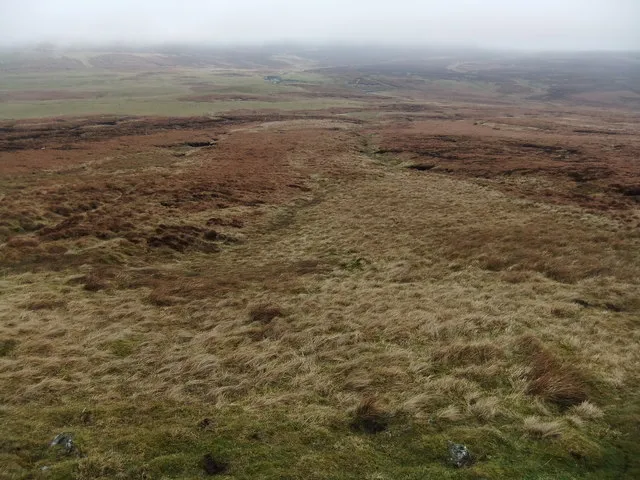
Photo: David Brown , CC BY-SA 2.0, via Wikimedia Commons
Walking the Long Road: What Britain's Pennine Way Reveals About Building Software Roadmaps That Actually Endure
On a damp Saturday in April 1965, a crowd gathered at Malham in the Yorkshire Dales to mark the official opening of the Pennine Way — Britain's first designated long-distance footpath. The route stretched 268 miles from Edale in Derbyshire to Kirk Yetholm just across the Scottish border, traversing some of the most demanding moorland terrain in England. It had taken thirty years from first proposal to opening day.
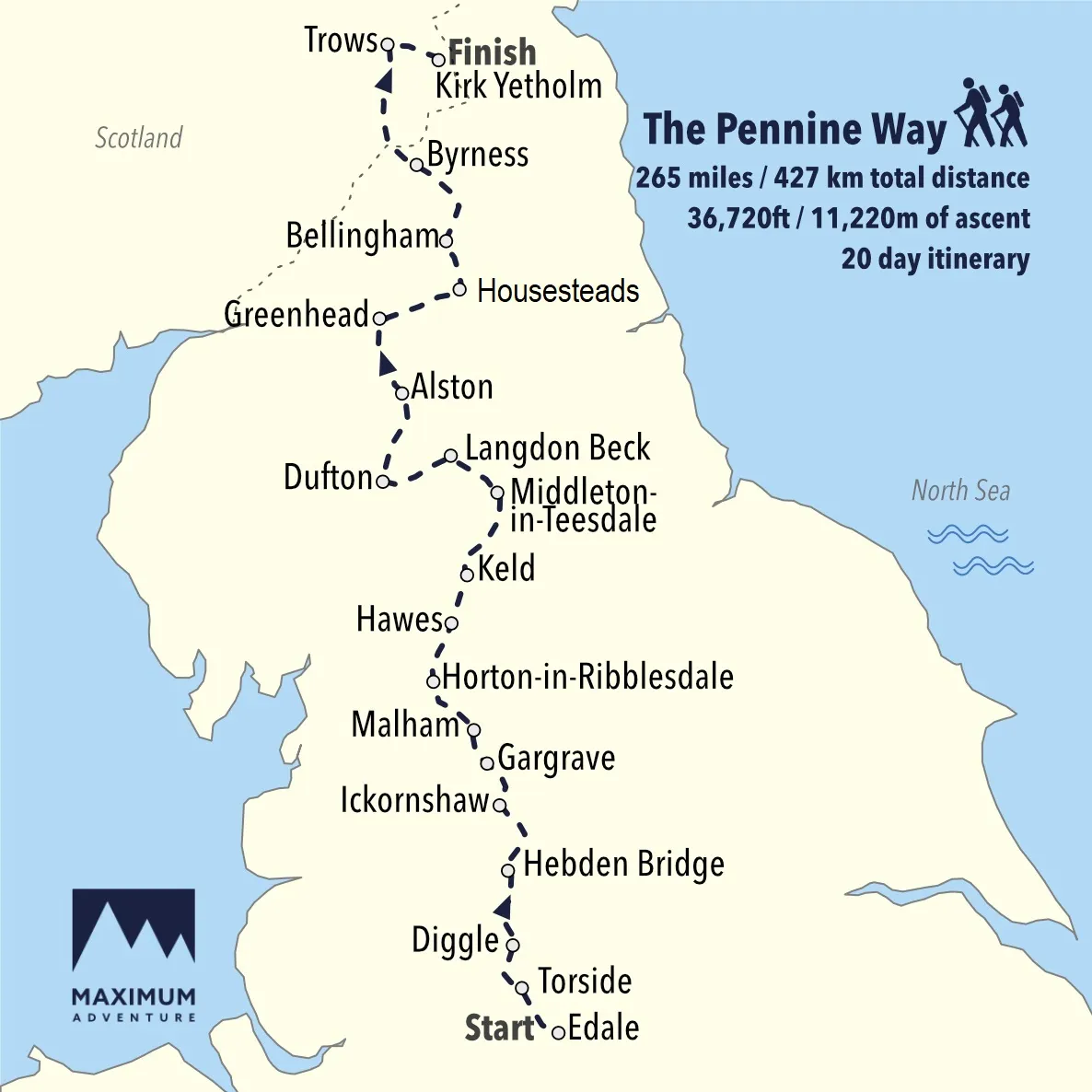 Photo: Pennine Way, via maximumadventure.com
Thirty years. For a walking path.
That timeline might prompt a dismissive reaction from anyone accustomed to the cadence of modern software delivery. But consider what those three decades actually produced: a route that has remained continuously open for nearly sixty years, that has adapted to changing environmental conditions and land access legislation, and that continues to serve tens of thousands of walkers annually. Compare that longevity to the average lifespan of a technology platform built under the pressure of a twelve-month delivery mandate, and the Pennine Way begins to look rather sensible.
The Vision Must Precede the Map
Tom Stephenson, the journalist and rambling advocate who first proposed the Pennine Way in a 1935 article for the Daily Herald, did not begin by drawing a precise route. He articulated a principle: that there should be a continuous right of way along the high ground of England's backbone, accessible to ordinary people regardless of land ownership. The specific path would be determined later, in negotiation with terrain, landowners, and local communities. The vision preceded — and remained independent of — the implementation details.
This sequencing matters enormously in software roadmapping, and it is frequently inverted. Technology teams are often asked to produce a roadmap before the strategic objective has been clearly articulated. The result is a sequence of features that lacks coherent direction — individual milestones that make local sense but do not accumulate into anything of lasting architectural significance.
A genuine technology vision statement — analogous to Stephenson's principle — should be expressible in a sentence or two without reference to specific technologies, frameworks, or delivery dates. 'We will build a platform that enables any regional NHS trust to configure and deploy patient communication workflows without engineering involvement' is a vision. A list of JIRA epics is not.
Terrain Is Not Optional Information
One of the most instructive aspects of Pennine Way planning was the absolute refusal of the landscape to accommodate the planners' preferences. Blanket bog, private grouse moors, river crossings, and military training areas all required the route to deviate from the theoretically optimal line. Some deviations were temporary — land access agreements changed over time, and the route has been adjusted accordingly. Others were permanent features of the geography that no amount of political will could alter.
Software roadmaps suffer from a chronic tendency to treat technical debt, regulatory constraints, and organisational dependencies as inconveniences to be noted in a risk register and subsequently ignored. They are, in fact, terrain. They are real features of the environment through which the roadmap must pass, and they will impose their own logic on the journey regardless of what the Gantt chart suggests.
Effective technology leads conduct what might be called a terrain survey before committing a roadmap to stakeholder review. This means an honest audit of existing system dependencies and their stability, an assessment of team capability relative to the technical demands of each phase, a review of regulatory timelines that may constrain or accelerate delivery, and an identification of the organisational 'grouse moors' — protected territories where progress will require negotiation rather than authority.
A roadmap that has not accounted for its terrain is not a plan. It is a wish list with dates.
Waypoints Are Not Compromises
The Pennine Way's route planners quickly discovered that the path's credibility depended on its waypoints — the villages, youth hostels, and road crossings that gave walkers achievable daily targets and provided communities along the route with a tangible stake in the path's success. Without waypoints, the 268-mile total becomes psychologically overwhelming. With them, it becomes a sequence of manageable sections, each with its own character and reward.
Software roadmaps require the same discipline. The temptation to present a multi-year strategy as a sequence of large, loosely defined phases — 'Foundation', 'Growth', 'Scale' — is understandable but counterproductive. These labels communicate direction without providing the intermediate accountability structures that keep teams aligned and stakeholders engaged.
Meaningful waypoints in a technology roadmap share several characteristics with their Pennine equivalents. They are specific enough to be unambiguously achieved or missed. They deliver something of value to at least one stakeholder group, not merely as a stepping stone to a later milestone. They are spaced at intervals that reflect the actual pace of progress through the terrain between them, not the pace that would make the overall timeline look reassuring. And they are connected by a logical sequence — each waypoint should make the next one materially easier to reach.
Community Conflict Is Part of the Design
The Pennine Way's planning process was contentious. Farmers objected to walkers crossing their land. Water authorities worried about reservoir contamination. Local councils disputed responsibility for path maintenance. These were not obstacles to the planning process — they were the planning process. The route that emerged was shaped by genuine engagement with competing interests, and that engagement is a significant reason why it has endured.
Technology roadmaps are rarely developed in isolation, but they are frequently developed without genuine stakeholder engagement. There is a meaningful difference between presenting a completed roadmap to affected teams and co-designing it with them. The former produces a document. The latter produces a shared commitment.
Product owners and engineering leads should identify their Pennine Way landowners early in the roadmapping process: the operations team whose existing workflows will be disrupted by a platform migration, the data governance function whose approval is required before a new analytics capability can be deployed, the customer-facing teams whose priorities may not align with the architectural changes required to support them. Surfacing these tensions at the design stage is uncomfortable. Encountering them at the delivery stage is catastrophic.
Maintenance Is Not Failure
The Pennine Way requires continuous maintenance. Erosion, flooding, and changes in land use mean that sections of the route are periodically rerouted, resurfaced, or temporarily closed. This is not regarded as evidence that the original design was inadequate — it is understood as the inevitable consequence of a living route passing through a dynamic landscape.
Software platforms are also living systems passing through dynamic landscapes. Dependencies deprecate. Security requirements evolve. User behaviour shifts in ways that expose architectural assumptions made years earlier. A roadmap that does not allocate explicit capacity for this ongoing maintenance is not a realistic plan — it is a projection that assumes the terrain will remain static, which it never does.
Britain's long-distance path network allocates roughly a third of its maintenance budget to reactive work — responding to conditions that could not be anticipated at the time of the path's design. Technology teams that allocate less than twenty per cent of their engineering capacity to maintenance and technical debt remediation are, in effect, allowing their paths to quietly degrade beneath the feet of their users.
Think in Trails, Not Sprints
The sprint is a valuable tool. It provides rhythm, accountability, and a mechanism for incorporating learning into delivery. But a roadmap built exclusively from sprints is a path built exclusively from individual footsteps — it lacks the intermediate structure that gives direction and the long-horizon vision that gives purpose.
Britain's technology teams — particularly those navigating the complexity of legacy modernisation, regulated industry transformation, or platform consolidation — would benefit enormously from adopting the trail-planning mindset. Articulate the vision clearly and independently of implementation details. Survey the terrain honestly before committing to a route. Place waypoints at intervals that are genuinely achievable and genuinely valuable. Engage the communities your path passes through before the route is fixed. And allocate for maintenance as a design requirement, not an afterthought.
The Pennine Way took thirty years to open and has been open for nearly sixty. The question worth asking of any technology roadmap is not 'can we deliver this in twelve months?' but 'will what we build still be serving its purpose in ten years?'
If the answer to the second question is uncertain, the first question is probably the wrong one to be asking.