The Knight's Gambit: Engineering Solutions Through Unconventional Problem-Solving Patterns

The Art of Indirect Progress
In the ancient game of chess, one piece stands apart from all others in its approach to navigation: the knight. While bishops glide along diagonals and rooks charge in straight lines, the knight employs an L-shaped movement that appears counterintuitive yet proves remarkably effective. This distinctive pattern—two squares in one direction followed by one square perpendicular—enables the knight to vault over pieces that would block any other chess piece entirely.
For software engineers operating within Britain's complex legacy system landscape, the knight's methodology offers profound insights into architectural problem-solving. Much like the knight navigating a crowded chessboard, modern development teams frequently encounter scenarios where direct paths prove impossible, yet lateral approaches yield elegant solutions.
Legacy Systems as Chessboard Constraints
Consider the challenges facing a typical UK financial services firm modernising a core banking system originally written in COBOL during the 1970s. Direct migration approaches—the equivalent of a rook's straight-line movement—often fail spectacularly when they encounter regulatory constraints, data dependencies, or operational requirements that cannot be interrupted.
The knight's approach suggests a different strategy entirely. Rather than attempting wholesale replacement, successful modernisation frequently involves creating new services that integrate with existing systems through carefully designed APIs, gradually extracting functionality whilst maintaining operational continuity. This L-shaped architectural pattern—moving sideways into new technology stacks before advancing forward with feature development—mirrors the chess piece's ability to reach destinations that direct approaches cannot achieve.
Pattern Recognition in Complex Systems
The knight's movement pattern reveals another crucial insight: effective problem-solving often requires recognising that the most efficient path between two points may not be the most obvious one. In software architecture, this translates to understanding when refactoring, abstraction layers, or entirely different technological approaches will ultimately prove more effective than brute-force solutions.
British engineering teams working with monolithic applications frequently discover that the knight's pattern applies directly to microservices decomposition. Rather than attempting to split monoliths along obvious functional boundaries—which often proves impossible due to tight coupling—successful decomposition strategies typically involve identifying small, loosely coupled components that can be extracted sideways from the main application before gradually expanding their scope.
Cultivating Lateral Thinking Frameworks
Developing a 'knight's perspective' within engineering teams requires deliberate cultivation of lateral thinking patterns. British organisations can implement several practical frameworks to encourage this approach:
The Constraint Inventory Method: Before pursuing direct solutions, teams systematically catalogue all constraints—technical, regulatory, operational, and political—that might block conventional approaches. This exercise often reveals alternative paths that circumvent multiple obstacles simultaneously.
Perpendicular Prototyping: When facing complex integration challenges, teams develop proof-of-concept solutions that deliberately avoid the most obvious implementation approaches. This technique frequently uncovers architectural patterns that prove more robust and maintainable than initial assumptions suggested.
The Knight's Question Framework: For each significant technical decision, teams ask: "If we couldn't solve this problem directly, what adjacent problems could we solve that would make the original challenge irrelevant?" This reframing often leads to more elegant architectural solutions.
Historical Precedent in British Engineering
Britain's engineering heritage provides numerous examples of knight-like problem-solving. Isambard Kingdom Brunel's approach to the Thames Tunnel exemplified this methodology—when conventional excavation techniques failed repeatedly, he developed the innovative tunnelling shield that advanced through controlled lateral movements rather than direct forward progress.
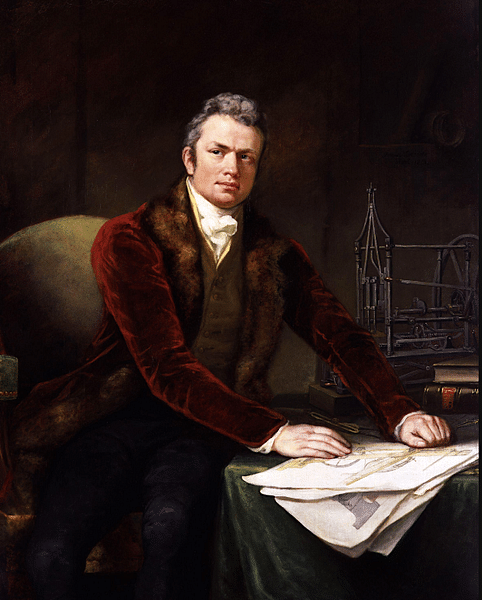 Photo: Thames Tunnel, via www.worldhistory.org
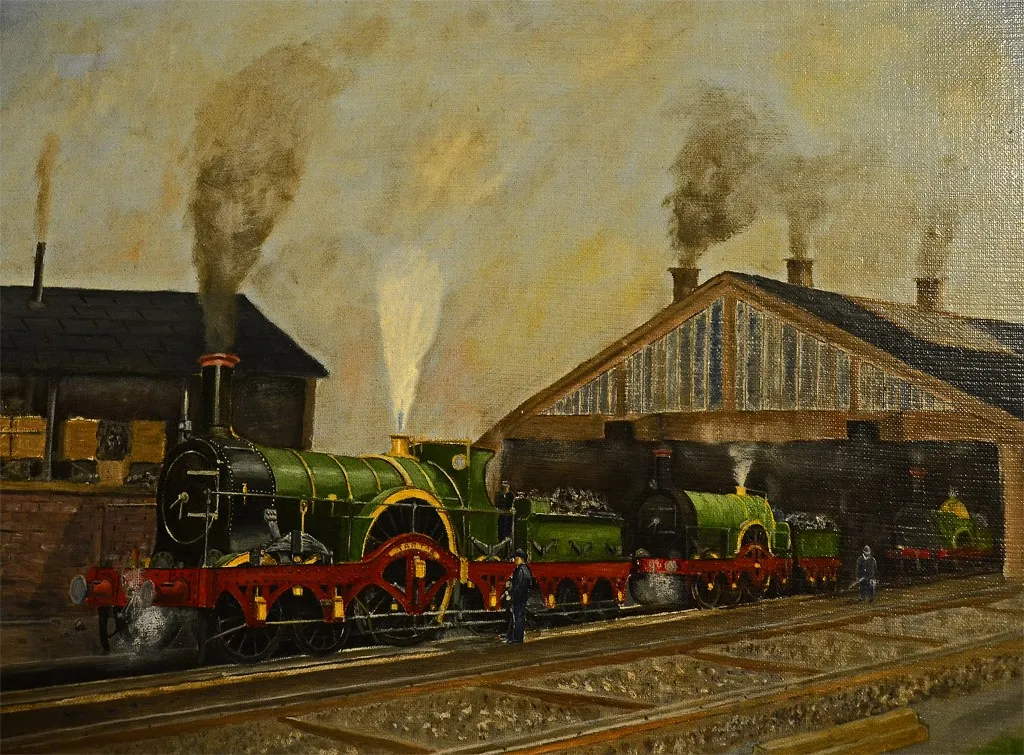 Photo: Isambard Kingdom Brunel, via worldwiderails.com
Similarly, the development of radar during the Second World War at Chain Home stations demonstrated lateral thinking at its finest. Rather than attempting to build more powerful transmitters—the direct approach—British engineers developed sophisticated signal processing techniques that extracted maximum information from relatively modest power levels.
 Photo: Chain Home stations, via insitu.org.uk
Modern Applications in British Tech
Contemporary British technology companies continue to demonstrate the knight's approach across various domains. Consider how Arm Holdings revolutionised processor design not by building faster chips, but by optimising for power efficiency—a lateral move that ultimately proved far more strategically valuable than pursuing raw computational speed.
In the realm of fintech, companies like Monzo and Starling Bank succeeded not by competing directly with established banks on traditional banking services, but by reimagining the entire customer experience through mobile-first architectures and real-time transaction processing.
Implementation Strategies for Development Teams
Successful implementation of knight-like problem-solving requires structural changes within development organisations. British engineering teams can adopt several specific practices:
Cross-functional Pairing: Regularly pairing engineers from different specialisations—frontend with infrastructure, security with user experience—naturally encourages the kind of perpendicular thinking that characterises the knight's movement.
Architectural Spike Rotations: Teams allocate specific time for exploring unconventional solutions to persistent problems, with the explicit understanding that these investigations may not yield immediate practical results but often reveal alternative approaches.
Constraint-driven Design Sessions: Rather than beginning with ideal solutions, teams start with comprehensive constraint mapping and work backwards to identify feasible implementation strategies.
The Strategic Advantage of Indirect Approaches
The knight's unconventional movement pattern ultimately provides strategic advantages that extend beyond mere obstacle avoidance. In chess, knights often control key squares precisely because opponents fail to anticipate their indirect approach paths. Similarly, engineering solutions that emerge from lateral thinking frequently prove more resilient and adaptable than obvious alternatives.
For British software engineering teams operating in increasingly complex technical landscapes, cultivating the knight's perspective represents more than tactical flexibility—it embodies a fundamental approach to innovation that transforms constraints into competitive advantages through the disciplined application of unconventional thinking patterns.