Tick, Iterate, Conquer: What John Harrison's Marine Chronometer Teaches Modern Engineers About Precision Under Pressure
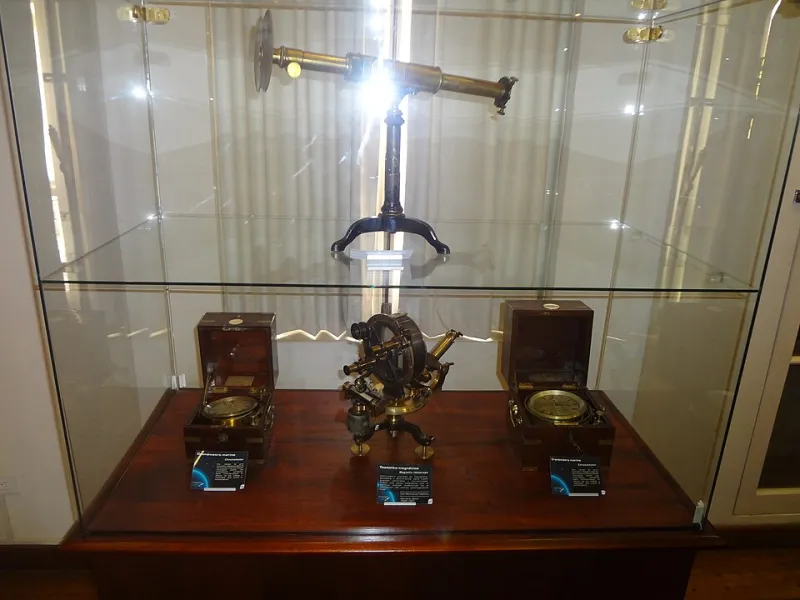
Photo: David Adam Kess, CC BY-SA 4.0, via Wikimedia Commons
Tick, Iterate, Conquer: What John Harrison's Marine Chronometer Teaches Modern Engineers About Precision Under Pressure
On a grey October morning in 1707, four Royal Navy vessels ran aground off the Isles of Scilly, killing nearly two thousand sailors in one of Britain's most catastrophic maritime disasters. The culprit was not incompetence or treachery — it was an inability to determine longitude at sea. Within seven years, Parliament had passed the Longitude Act, offering a prize of £20,000 (the equivalent of roughly £4 million today) to whoever could solve the problem definitively. What followed was one of history's most compelling engineering sagas, and one that resonates with extraordinary clarity in the world of modern software development.
 Photo: Isles of Scilly, via www.worldatlas.com
The Problem of Synchronisation
To understand longitude, one must first understand time. A ship's navigator could calculate latitude with reasonable confidence by measuring the angle of the sun above the horizon. Longitude, however, required knowing the precise difference between local time and the time at a fixed reference point — Greenwich, for instance. Every four minutes of time difference corresponded to one degree of longitude. The challenge, therefore, was not philosophical but profoundly mechanical: how do you keep accurate time on a vessel heaving through Atlantic swells, subjected to temperature extremes, salt air, and constant vibration?
Replace the ship with a distributed cloud infrastructure, and the question becomes immediately familiar. Modern systems depend on synchronised clocks across geographically dispersed nodes. Network Time Protocol (NTP) and its successor, Precision Time Protocol (PTP), exist precisely because distributed systems must agree on what time it is. Clock drift — even at the microsecond level — can cause transaction ordering failures, split-brain scenarios in consensus algorithms, and data corruption in event-sourced architectures. The longitude problem, in essence, is the distributed systems problem, separated by three centuries of vocabulary.
Harrison's Iterative Methodology
John Harrison was not a member of the Royal Society. He held no academic post, possessed no naval commission, and had received no formal scientific education. He was a carpenter's son from Barrow-upon-Humber who had taught himself clockmaking by dismantling and rebuilding mechanisms with meticulous care. What he possessed in place of institutional credibility was something arguably more valuable: an obsessive commitment to iteration.
His first marine timekeeper, H1, was completed in 1735. It was ingenious — a grasshopper escapement mechanism that required no lubrication and compensated for temperature variation using bimetallic strips. It performed well in trials. Yet Harrison considered it insufficient. Rather than submit H1 for the prize, he requested more time and funding to build something better. H2 followed, then H3, each incorporating lessons absorbed from the previous model's shortcomings. This was not perfectionism for its own sake; it was disciplined, evidence-based refinement.
H4, completed in 1759 after nearly three decades of work, was a radical departure — a pocket-watch-sized instrument of extraordinary accuracy. On its trial voyage to Jamaica in 1761, it lost a mere five seconds over eighty-one days at sea. By any reasonable measure, Harrison had solved the longitude problem.
For software engineers, this progression maps almost precisely onto test-driven development cycles. Each iteration of Harrison's work began with a clearly defined failure mode identified in the previous version. Each design decision was validated against real-world conditions rather than theoretical models. The grasshopper escapement was not invented in a moment of inspiration; it was the logical response to observed lubrication failures in existing mechanisms. Modern engineers who treat each sprint retrospective as a genuine engineering audit — rather than a procedural formality — are working within the same intellectual tradition.
Institutional Inertia and the Outsider Advantage
Harrison's story carries a cautionary dimension that software teams would do well to heed. Despite overwhelming empirical evidence, the Board of Longitude — dominated by astronomers who favoured a competing lunar-distance method — repeatedly obstructed Harrison's claim to the prize. They demanded additional trials, altered the prize conditions retrospectively, and withheld funds. It was only through the personal intervention of King George III that Harrison received full recognition at the age of seventy-nine.
This institutional resistance to an inconvenient solution is not a relic of the Georgian era. Technology organisations exhibit precisely this behaviour when a junior engineer proposes a simpler architectural approach that contradicts years of accumulated complexity, or when an external consultancy identifies a problem that internal teams have been incentivised to overlook. The lesson is not that institutions are invariably wrong — the Board of Longitude contained genuinely brilliant minds — but that evaluation frameworks must be constructed around evidence rather than orthodoxy.
At Knight-Ware Labs, we encounter this dynamic regularly. The most robust distributed systems we have examined were frequently designed by engineers who questioned first principles rather than inheriting assumptions. Harrison's willingness to discard the pendulum clock entirely, rather than adapt it for marine use, exemplifies the kind of architectural courage that separates adequate solutions from genuinely transformative ones.
Precision as a Design Requirement, Not an Afterthought
One of Harrison's most underappreciated contributions was his insistence that precision must be engineered into a system from the outset, not corrected for after the fact. His bimetallic temperature compensation was not a patch applied to H1 after observing drift — it was a fundamental design decision made in anticipation of a known environmental variable.
Modern distributed systems frequently make the opposite mistake. Clock synchronisation is treated as infrastructure boilerplate, configured once and rarely revisited, until a production incident reveals that NTP drift has caused a database cluster to reject valid writes or a message queue to deliver events out of sequence. The remediation cost is invariably higher than the prevention cost would have been.
Engineering teams building event-sourced systems, financial transaction platforms, or any architecture where temporal ordering carries semantic weight should treat timekeeping as a first-class design concern. This means specifying acceptable drift tolerances in system requirements, implementing monitoring for clock skew across nodes, and understanding the failure modes introduced by leap seconds — a problem Harrison would have appreciated, given that even the Earth's rotation is not perfectly consistent.
The Craft Beneath the Code
Harrison's legacy is ultimately a testament to craftsmanship sustained under institutional pressure and across an extraordinarily long time horizon. He did not abandon H3 when it proved insufficient; he extracted every lesson it offered before committing to a fundamentally different approach. He documented his mechanisms in meticulous detail, enabling others to understand and eventually replicate his work.
For software architects, the parallel is clear. Precision systems require patient, documented iteration. They demand that engineers understand the failure modes of their predecessors and resist the temptation to declare victory prematurely. They reward those who treat each production anomaly as data rather than inconvenience.
Britain's greatest navigational crisis was solved not by the establishment's preferred method, but by a craftsman who refused to stop iterating until the answer was irrefutable. The distributed systems challenges facing modern engineering teams are no less demanding. The methodology that resolves them will almost certainly look rather similar.