Last Orders: What the British Pub's Closing Ritual Teaches Engineers About Graceful Service Termination
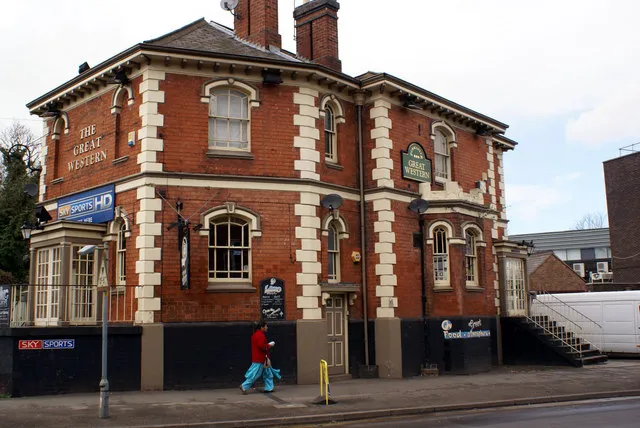
Photo: Colin Craig, CC BY-SA 2.0, via Wikimedia Commons
Last Orders: What the British Pub's Closing Ritual Teaches Engineers About Graceful Service Termination
At eleven o'clock on a weekday evening in most British pubs, something remarkable happens. The landlord calls last orders. Patrons who have been contentedly nursing their pints suddenly move with purpose. Final rounds are ordered, consumed, and then — with relatively little drama — people leave. The lights go up. The doors close. Nobody is surprised. Nobody argues that they should have been given more time. The cutoff was known, it was signalled in advance, and it was respected.
Contrast this with the American approach to keeping things running. US bars frequently operate until two or three in the morning, with closing time varying by state, county, and establishment. The culture of indefinite extension — of keeping the lights on just a little longer, of one more round, of maybe just a few more minutes — pervades not only the hospitality industry but, rather tellingly, the technology sector too.
For British software engineers, there is a genuinely useful engineering philosophy buried inside the pub's closing ritual. It concerns the way we end things: APIs, services, product versions, and legacy systems. And it suggests that British culture may be unusually well-equipped to do termination properly.
The Problem With Keeping the Lights On
Software has a well-documented tendency to outlive its usefulness by years, sometimes decades. Legacy systems persist not because they are good but because the cost of removing them feels greater than the cost of maintaining them — until suddenly it does not, and the removal becomes an emergency rather than a planned decommission.
The pattern is particularly acute in API management. A v1 endpoint is released. A v2 follows. The documentation politely notes that v1 is deprecated. Six months later, it is still running. A year later, a significant proportion of clients are still calling it. Three years later, a junior engineer discovers it buried in the infrastructure and is afraid to touch it because nobody knows what depends on it.
This is not a technical failure. It is a cultural one. The decision to keep v1 alive past its usefulness was never a deliberate choice — it was the absence of one. Nobody called last orders.
What the Landlord Knows
The British pub's closing ritual works because it combines three elements that software deprecation strategies frequently lack: advance notice, a non-negotiable cutoff, and a social contract that makes compliance the default.
The landlord does not announce closing time at closing time. The licensing hours are published. The bell rings at fifteen minutes to. Last orders is called. There is a winding-down period. And then it ends. The sequence is predictable, the timeline is known, and the consequence of ignoring it — being asked to leave by someone considerably less polite than the landlord — is understood by all parties.
Effective API and service deprecation follows precisely this structure, and the teams that do it well are those that treat it as a communications exercise as much as a technical one.
The deprecation notice is the licensing hours board. It should be posted prominently, in the documentation, in the API response headers, and in any developer portal or service catalogue. The Sunset HTTP header — defined in RFC 8594 — exists precisely for this purpose. A response header that reads Sunset: Sat, 01 Mar 2025 00:00:00 GMT is the pub's opening hours chalked on the board outside. Consumers who miss it have no reasonable complaint.
The migration guide is the last orders bell. It signals that time is running out and provides the information needed to act before the cutoff. A deprecation without a migration path is a bell without a bar to order from. Consumers cannot act on urgency alone; they need direction.
The hard cutoff is the locked door. It must be real. A sunset date that slips once will slip again. Clients who know that deadlines are negotiable will negotiate, and the v1 endpoint will be running at your retirement party. The cutoff must be enforced, communicated clearly, and — critically — must not be moved without a formal, documented, and time-limited exception process.
Practical Deprecation for the British Engineer
Applying this framework to real-world service lifecycle management requires a few concrete practices that go beyond the theoretical.
Version your contracts from day one. A service that launches without versioning will eventually need to be versioned under pressure, which is the worst possible time to make that decision. Whether you use URI versioning (/v1/), header-based versioning, or content negotiation, the choice matters less than the discipline of making it before consumers depend on your interface.
Publish a support matrix, not just a version number. Consumers need to know not only which versions exist but which are actively supported, which are in maintenance mode, and which are approaching end-of-life. A simple table in your documentation — analogous to Ubuntu's LTS support calendar — gives clients the runway they need to plan migrations without requiring them to contact you to ask.
Automate the warning, enforce the cutoff. Response headers, log warnings, and developer portal notifications can all be automated to escalate as the sunset date approaches. Consider returning a Warning header in responses from deprecated endpoints ninety, sixty, and thirty days before termination. The closer the cutoff, the louder the bell.
Treat dependency teardown as a first-class engineering task. When a service is decommissioned, the work does not end when the endpoint returns 410 Gone. Downstream configurations, DNS entries, monitoring rules, security certificates, and internal documentation all require explicit cleanup. A decommission checklist — reviewed and signed off by a senior engineer — is the equivalent of the landlord doing the rounds before locking up: methodical, comprehensive, and non-negotiable.
The Startup Counterexample
It is worth acknowledging why the American tendency toward indefinite extension exists. In a startup context, keeping a legacy endpoint alive costs relatively little and avoids the customer support burden of a forced migration. The calculus seems reasonable in the short term.
The problem is that software systems are not pubs. The cost of an empty pub after closing time is trivial. The cost of a deprecated API endpoint is not: it must be secured, monitored, logged, and occasionally patched against vulnerabilities. Every hour it runs after its useful life is engineering time that could be spent elsewhere. The accumulated weight of these decisions is what produces the legacy systems that consume the majority of many organisations' infrastructure budgets.
British engineers, steeped in a culture that understands the social utility of a firm closing time, are well-positioned to resist this pressure. Last orders is not an inconvenience. It is a service. It tells everyone in the room that it is time to finish their drinks and go home — and that tomorrow, the pub will be ready to serve them properly again.