Simplicity Is the Feature: The Victorian Savings Bank That Still Outclasses Your Neobank
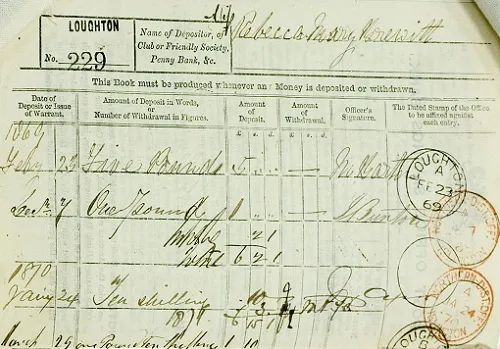
Photo: Victorian post office counter savings passbook historical, via 4.bp.blogspot.com
In 1861, a depositor could walk into any of thousands of post offices across Britain, hand over a sum as small as a shilling, and receive in return a promise backed by the Treasury. No app to download. No onboarding funnel. No cashback on spending at partner retailers. The Post Office Savings Bank offered exactly one thing — a safe place for your money — and within decades it held the savings of millions of working people who had previously kept coins in tins under the bed.
It is worth sitting with the discomfort of this comparison: a Victorian institution with pen, ink and ledgers earned deeper public trust than most of today's challenger banks have managed with unlimited engineering budgets. The difference was not technology. It was philosophy.
The Radical Power of One Product
The Savings Bank's design constraint was its users: people for whom every penny mattered and who had every historical reason to distrust financial institutions. The response was to strip the product to a single, comprehensible promise. Deposit money. It is safe. It earns modest interest. Withdraw when you wish.
Every element of the service reinforced that promise. The famous savings stamps let the poorest households accumulate deposits in small increments. The passbook gave depositors a physical, legible record of their standing — transparency as a design principle, not a compliance afterthought.
Now look at the modern neobank. Round-ups, savings pots, investment side-products, cryptocurrency exposure, referral schemes, tiered metal cards. Each feature was justified in a product review; collectively, they communicate something else entirely — that the institution's attention is on growth mechanics rather than the depositor's money. For hesitant users, and Britain has many, feature density reads as risk density.
Trust Is Engineered, Not Marketed
The uncomfortable truth for software teams is that the Victorian model was an engineering achievement. The Savings Bank succeeded because its operators treated reliability as the product: meticulous double-entry ledgers, audited reconciliations, and a governance structure in which errors were rare and, when found, corrected at the institution's expense.
If you are building financial software for cautious users, the checklist that follows from this history is refreshingly short:
- One core promise, stated in plain English. If your landing page needs a glossary, the product is not ready.
- A legible record the user owns. The passbook's modern equivalent is an exportable, human-readable statement — not a database you graciously query on their behalf.
- Small entry, honoured fully. Support the £5 depositor with the same rigour as the £50,000 one. The Victorian service did, and its reputation compounded accordingly.
- Errors corrected at your cost, visibly. Nothing builds institutional trust faster than a public record of the institution making things right.
- Feature restraint as a release criterion. Before shipping any addition, ask whether it strengthens or merely decorates the core promise.
The Lesson for the Craft
There is a professional development point here that extends well beyond fintech. The engineers and product people we most admire are not those who can add features fastest, but those with the judgement to know what to refuse. Restraint is a skill, and like the Victorian clerks' ledger discipline, it is learned through deliberate practice.
The Post Office Savings Bank understood something that much of the modern industry has forgotten: for the hesitant user, simplicity is not the absence of features. It is the presence of trust, made tangible in software. Five shillings and a promise, kept for a century, remains a more compelling product than any feature stack we have yet shipped.