Cataloguing Code: How Victorian Libraries Solved the Knowledge Management Puzzle Modern Engineers Still Face

Whilst software engineers wrestle with information architecture and knowledge management systems, Victorian Britain quietly solved many of these same challenges through an innovation that transformed how societies organise and access information: the public library network. Andrew Carnegie's systematic funding of libraries across Britain created more than repositories for books—it established a distributed knowledge infrastructure whose principles remain remarkably relevant for modern software engineering teams.
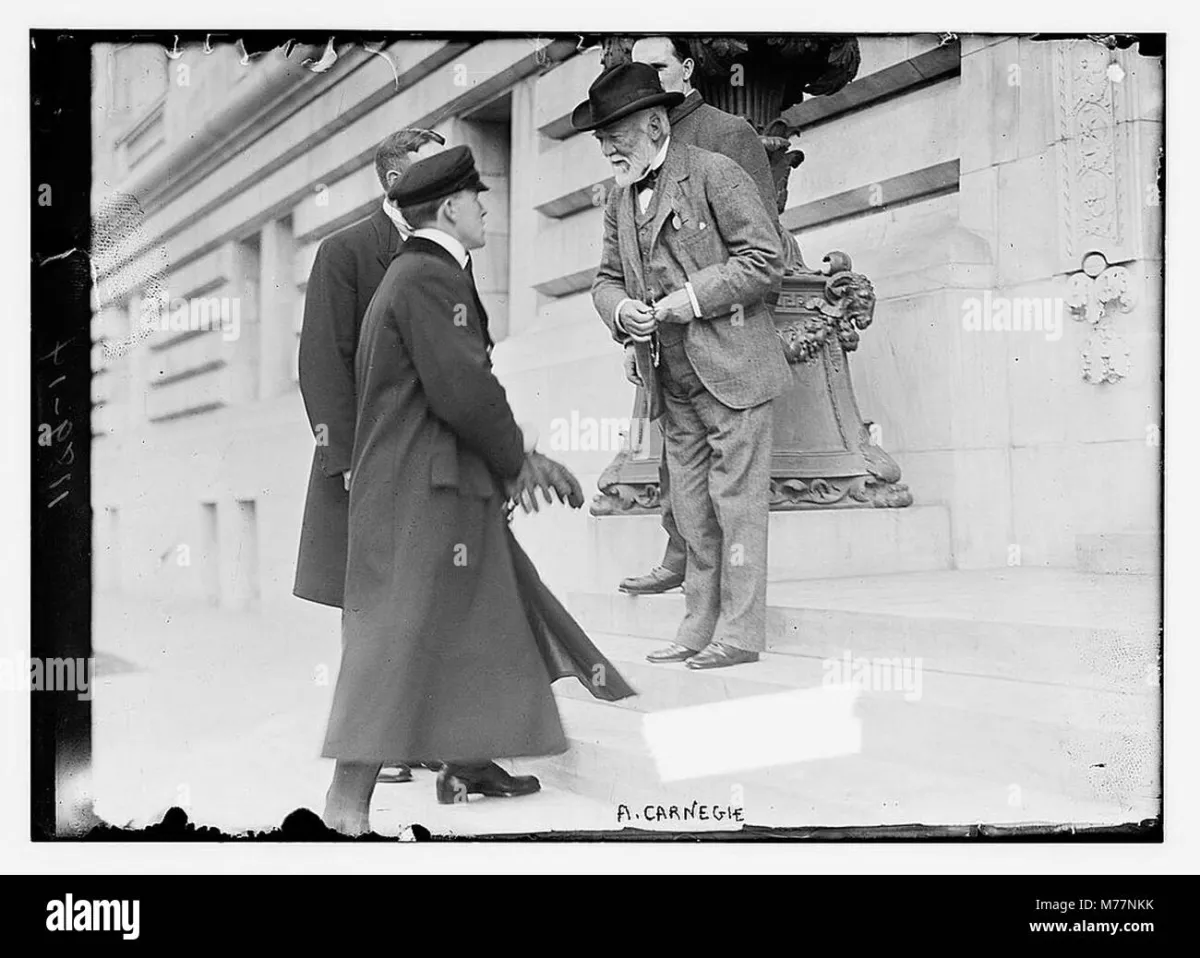 Photo: Andrew Carnegie, via c8.alamy.com
The Dewey Decimal Revolution
Melvil Dewey's classification system, adopted by British libraries in the 1890s, represents perhaps history's most successful information taxonomy. The system's genius lies not in its specific categories, but in its hierarchical structure that balances specificity with discoverability—precisely the challenge facing modern software documentation and code organisation.
 Photo: Melvil Dewey, via image3.slideserve.com
Contemporary development teams struggle with identical problems: How do you organise information so that both newcomers and experts can find what they need? How do you balance detailed categorisation with browsable hierarchies? The Dewey system solved these challenges through careful hierarchical design that modern information architects would recognise immediately.
Consider how successful API documentation mirrors Dewey principles: broad categories (authentication, data models, endpoints) subdivide into specific implementations, with cross-references connecting related concepts. The most effective developer documentation platforms—from Stripe's API reference to GitHub's guides—unconsciously replicate organizational principles that Victorian librarians perfected.
Inter-Library Loans as API Federation
The inter-library loan system, established across Britain's library network, created a federated resource-sharing protocol that predates modern API architecture by nearly a century. Libraries developed standardised request formats, authentication mechanisms, and resource-sharing agreements that enabled seamless access to distributed collections.
This system directly parallels contemporary microservices architecture. Individual libraries maintained local autonomy whilst participating in a broader network that multiplied available resources for all participants. The protocols they developed—standardised cataloguing, request routing, and resource verification—mirror the challenges software engineers face when building federated systems.
Modern British fintech companies implementing open banking APIs might study how libraries solved similar federation challenges: establishing trust between independent institutions, standardising data formats across diverse systems, and creating protocols that balance autonomy with interoperability.
Community Knowledge Hubs
Public libraries succeeded because they functioned as more than storage facilities—they became community knowledge hubs where information flowed in multiple directions. Librarians didn't just retrieve books; they guided research, connected related resources, and helped users navigate complex information landscapes.
This role precisely mirrors what the most effective internal knowledge management systems achieve. The best engineering wikis, documentation platforms, and knowledge bases don't just store information—they facilitate knowledge transfer, connect related concepts, and guide users through complex technical landscapes.
Successful British tech firms often replicate this hub model: senior engineers who function like reference librarians, documentation systems that guide rather than merely store, and knowledge-sharing practices that create community rather than just repositories.
Cataloguing for Discovery
Victorian libraries understood that information unused is information wasted. Their cataloguing systems prioritised discoverability over perfect accuracy, creating multiple pathways to the same resources. Card catalogues included subject indexes, author references, and cross-listings that anticipated various user approaches to the same information.
Modern software documentation often fails this discoverability test. Technical writers focus on comprehensive coverage whilst neglecting the multiple ways engineers might approach the same information. The library model suggests different strategies: multiple entry points to the same content, cross-references that anticipate user mental models, and indexing systems that support browsing as well as searching.
Equitable Access Principles
Carnegie's library funding came with specific requirements: free access, open hours, and service regardless of social status. These principles established information access as a public good rather than a private privilege—a philosophy that modern engineering teams might profitably adopt.
Many internal knowledge management systems inadvertently create access hierarchies: senior engineers who hoard knowledge, documentation that assumes extensive context, and information architectures that favour insiders over newcomers. The public library model demonstrates how deliberate design choices can ensure equitable access to essential information.
Maintenance and Evolution
Libraries succeeded because they established sustainable maintenance practices: regular collection updates, systematic cataloguing, and professional staff dedicated to information stewardship. These practices ensured that knowledge systems remained current and useful rather than degenerating into historical curiosities.
Software documentation notoriously suffers from maintenance neglect. The library model suggests solutions: dedicated information stewardship roles, systematic review processes, and treating documentation maintenance as professional responsibility rather than optional overhead.
The Distributed Network Effect
Britain's library network succeeded through coordination without centralisation. Individual libraries maintained local autonomy whilst participating in shared standards and resource-sharing agreements. This balance created resilience, specialisation, and efficiency that purely centralised or purely autonomous systems couldn't achieve.
Modern software engineering faces identical challenges when building knowledge management across distributed teams. The library model suggests architectural principles: local autonomy with shared standards, resource sharing without central control, and coordination mechanisms that enhance rather than constrain local effectiveness.
Practical Implementation
British software teams can implement library-inspired knowledge management through several approaches:
Hierarchical Information Architecture: Organise documentation using clear hierarchies that support both browsing and targeted search.
Multiple Discovery Pathways: Create various entry points to the same information, anticipating different user mental models and contexts.
Dedicated Stewardship: Assign specific responsibility for information maintenance and updates, treating documentation as professional infrastructure.
Federated Resource Sharing: Enable teams to share knowledge whilst maintaining local autonomy and specialisation.
Beyond Digital Libraries
The lesson isn't to build digital libraries, but to understand why libraries succeeded as knowledge management systems. Their success stemmed from deliberate design choices that prioritised user needs over administrative convenience, discoverability over perfect organisation, and sustainable maintenance over initial comprehensiveness.
British engineering culture already values systematic documentation, careful organisation, and institutional continuity—precisely the characteristics that made the library system successful. The challenge is recognising that effective knowledge management principles were field-tested and proven in Victorian reading rooms long before software engineering existed.
Modern British software teams possess cultural advantages for implementing library-inspired knowledge management. The blueprint exists in institutional memory—it simply needs translation into contemporary technical practice.