Humble Sheds, Historic Breakthroughs: How Bletchley's Workshop Culture Outdelivered Silicon Valley Before Silicon Valley Existed

The Power of Productive Discomfort
Whilst Silicon Valley celebrates its gleaming campuses and infinite coffee bars, Britain's greatest computational triumph emerged from a collection of draughty wooden huts scattered across a Buckinghamshire estate. Bletchley Park's codebreakers didn't just crack Enigma—they pioneered a development methodology that modern software teams would recognise as lean, focused, and ruthlessly effective.
 Photo: Silicon Valley, via thumbs.dreamstime.com
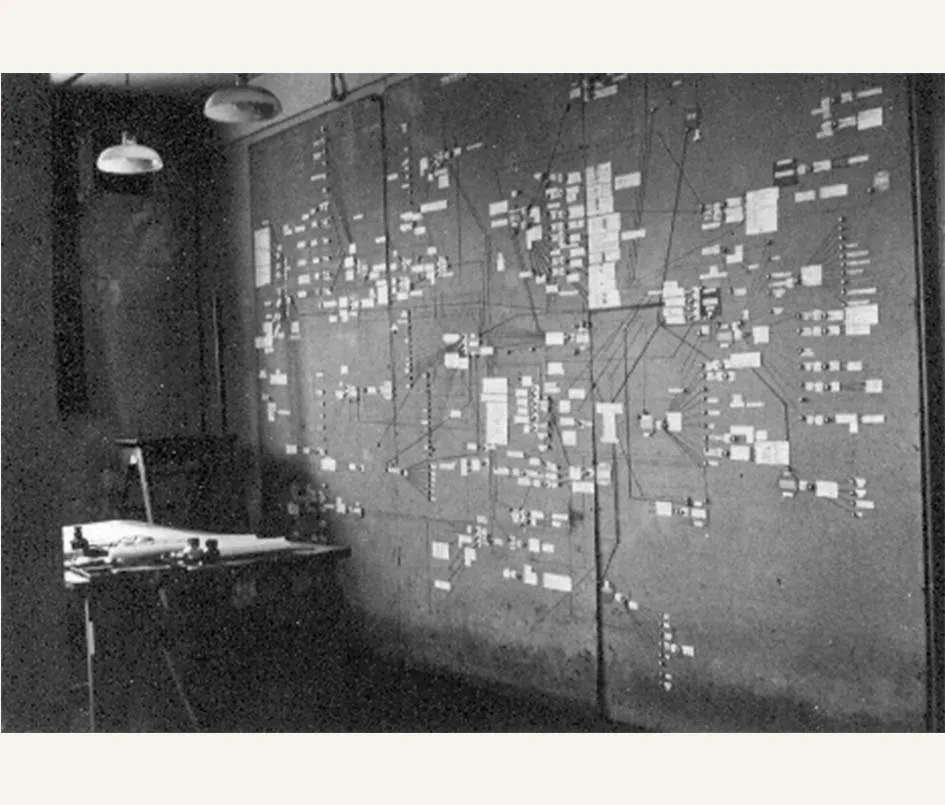 Photo: Bletchley Park, via bletchleypark.org.uk
The lesson for today's UK technology leaders isn't nostalgic romanticism about wartime austerity. It's understanding why deliberate constraints often produce breakthrough innovation where unlimited resources fail.
Resource Scarcity as Creative Catalyst
At Bletchley, teams worked with mechanical calculators, pencils, and their own intellectual rigour. No fancy IDEs, no cloud computing, no endless tool sprawl. This wasn't primitive—it was focused. When you can't solve problems by throwing technology at them, you're forced to think more deeply about the problem itself.
Modern software engineering has rediscovered this principle through movements like DevOps minimalism and the deliberate adoption of constraint-based development. Teams that impose artificial limits—whether through technology choices, team size, or sprint duration—often outperform those with unlimited resources.
The psychology is straightforward: constraints force creativity. At Bletchley, limited computing power meant algorithms had to be elegant. Restricted communication channels meant documentation had to be precise. Time pressure meant solutions had to work immediately, not eventually.
The Hut Advantage: Small Teams, Big Impact
Bletchley's organisational structure inadvertently prefigured modern agile methodologies. Each hut functioned as an autonomous unit with clear objectives, minimal hierarchy, and direct accountability for results. Hut 6 handled German Army and Air Force codes; Hut 8 tackled Naval Enigma; Hut 3 processed intelligence.
This wasn't accidental—it was necessity. In wartime, bureaucratic delays meant lives lost. Teams needed authority to make decisions quickly and implement solutions immediately. The flat organisational structure emerged from operational requirements, not management theory.
Contemporary software teams can apply this model through squad-based development, where small, cross-functional groups own specific features or services end-to-end. The key insight from Bletchley is that autonomy without accountability breeds chaos, but autonomy with clear objectives breeds excellence.
Documentation as Survival Tool
Perhaps counter-intuitively, resource constraints at Bletchley produced exceptional documentation practices. When knowledge couldn't be stored in sophisticated systems, it had to be captured in human-readable formats that could survive personnel changes and organisational disruption.
The codebreakers developed meticulous record-keeping systems because they understood that undocumented breakthroughs were worthless if the original discoverer was transferred or eliminated. This created a culture where knowledge sharing wasn't optional—it was essential for mission success.
Modern development teams often treat documentation as technical debt, something to address "when we have time." Bletchley's approach suggests the opposite: documentation is infrastructure, as critical as the code itself.
Embracing the Workshop Mentality
The most profound lesson from Bletchley isn't about specific tools or techniques—it's about mindset. The codebreakers approached problems like craftspeople, not factory workers. They understood their tools intimately, improvised solutions from available materials, and took personal ownership of their work's quality.
This workshop mentality stands in sharp contrast to the industrial software development model that dominated the early 2000s, with its emphasis on process standardisation and role specialisation. Bletchley's teams were generalists who could move between different aspects of a problem as needed.
For UK software teams, this suggests hiring for adaptability and curiosity rather than narrow technical specialisation. It means creating environments where developers feel ownership over the entire problem, not just their specific component.
Practical Applications for Modern Teams
Implementing Bletchley principles doesn't require relocating to rural estates or abandoning modern tooling. It means deliberately choosing simplicity over complexity, focus over feature creep, and team autonomy over management oversight.
Start by identifying your team's "huts"—natural divisions of responsibility that can operate semi-independently. Establish clear objectives for each unit and give them authority to achieve those objectives however they see fit.
Introduce productive constraints: limit the number of tools in your technology stack, set strict timebox limits for feature development, or establish maximum team sizes that force clear communication.
Most importantly, cultivate the workshop mentality. Encourage developers to understand problems deeply rather than implementing solutions superficially. Create space for experimentation and failure, recognising that breakthrough innovation often emerges from unexpected approaches to familiar challenges.
The Enduring Relevance of Humble Excellence
Bletchley Park's legacy isn't just historical—it's methodological. In an era when software development often feels overwhelmed by tool complexity and process overhead, the codebreakers' approach offers a different path: humble excellence through focused effort and creative constraint.
The timber huts have been preserved as museums, but their lessons remain startlingly relevant. Sometimes the most sophisticated solution is the simplest one, executed with care and precision by a small team that understands both the problem and their own capabilities.
For Britain's software development community, Bletchley represents more than national pride—it's a masterclass in achieving extraordinary results through ordinary means, elevated by exceptional thinking.